

How to Read Your Kia’s Window Sticker and Build Sheet: A Guide for Social Circle Buyers
How to Read Your Kia’s Window Sticker and Build Sheet: A Guide for Social Circle Buyers
Every new Kia on our lot comes with a window sticker packed with numbers, codes, and fine print that can feel genuinely overwhelming if you’ve never had a reason to study one closely. For Social Circle shoppers who want to walk into a purchase feeling genuinely informed, here’s a clear breakdown of what’s actually on that sticker and why it matters.
What the Window Sticker Actually Is
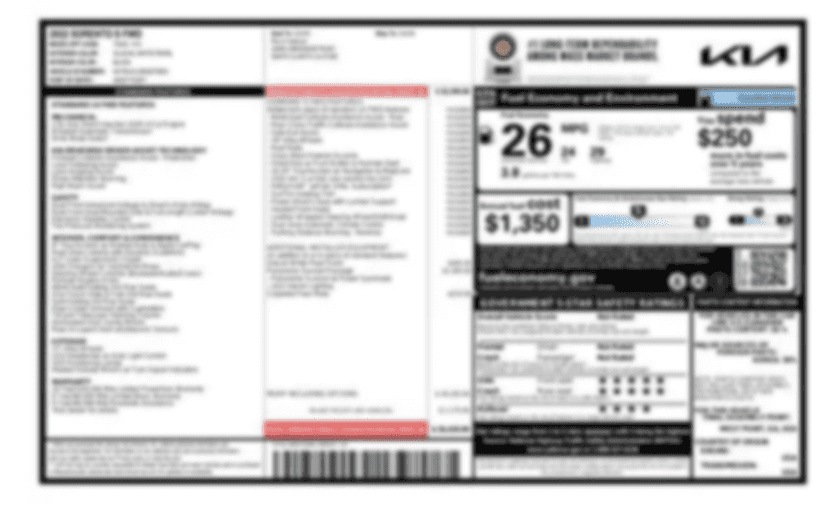
Officially called a Monroney label, named after the senator who sponsored the law requiring it, the window sticker is a federally mandated disclosure that must be displayed on every new vehicle sold in the United States. It exists specifically so buyers have access to standardized, verified information rather than relying solely on a salesperson’s description.
The MSRP Breakdown
The sticker’s price section typically breaks down into the base MSRP, the cost of any factory-installed options and packages, and a separate line for the destination charge — the fee covering transportation from the factory to the dealership. Understanding these as separate line items, rather than one combined number, makes it much easier to compare pricing across different trims or even different dealerships.
Fuel Economy Numbers — What’s EPA-Verified vs. Estimated
The mpg figures prominently displayed on the sticker come from standardized EPA testing, which means they’re genuinely comparable across different vehicles and manufacturers, but they’re still estimates based on a controlled test cycle. Your real-world mpg will vary based on driving habits, terrain, weather, and load — the EPA number is a reliable baseline for comparison, not a guarantee of exactly what you’ll see on your own commute.
The Build Sheet — A Deeper Level of Detail
- Lists the exact factory options and packages installed on that specific vehicle, down to individual feature codes
- Confirms the exact trim level, engine, and drivetrain configuration
- Can be used to verify that a vehicle actually has the features you were told it has, rather than relying on a verbal description
- Useful for confirming warranty start dates and original equipment if questions come up later in ownership
Safety Ratings on the Sticker
Many window stickers include NHTSA crash test ratings directly on the label itself, giving you an at-a-glance safety reference without needing to look it up separately — though it’s still worth confirming the specific trim and model year’s rating independently, since ratings can vary by configuration.
Why This Matters When You’re Negotiating
Understanding exactly what’s included in a vehicle’s MSRP — which options are factory-installed versus dealer-added, what the destination charge covers, and how the final price breaks down — puts Social Circle buyers in a much stronger position during any price conversation. It’s far easier to have a clear, confident negotiation when you understand exactly what you’re being asked to pay for.
Dealer-Added Items — What to Watch For
Some dealerships add their own supplemental stickers for dealer-installed accessories, paint protection, or other add-on products, separate from the factory Monroney label. These are worth evaluating on their own merits rather than assuming they’re mandatory — they’re optional, and it’s entirely reasonable to ask for a breakdown of exactly what each one includes before agreeing to pay for it.
Comparing Stickers Across Multiple Vehicles
If you’re cross-shopping a few different Kia trims or configurations, laying their window stickers side by side is one of the clearest ways to see exactly where the price differences come from — which features justify a jump to a higher trim, and which ones might not be worth the added cost for your specific needs and budget.
Keeping the Sticker for Your Records
It’s worth holding onto a copy of your vehicle’s original window sticker after purchase. It serves as a useful reference for exactly what came standard on your vehicle, which can matter later for insurance claims, warranty questions, or simply settling a dispute about whether a feature was original equipment.
Bringing Real Confidence Into the Buying Process
None of this requires becoming an expert overnight — it just means knowing enough to ask the right questions and verify the answers yourself rather than taking every number at face value. Social Circle buyers who understand their window sticker walk into the rest of the purchase process with real confidence instead of uncertainty.
Decoding the VIN on Your Build Sheet
Your vehicle’s VIN, listed on both the window sticker and build sheet, actually encodes real information about the vehicle itself — the manufacturing plant, model year, engine type, and a unique serial number specific to that one vehicle. While you don’t need to memorize how to decode it yourself, knowing that this information is embedded and verifiable gives you another way to confirm that the vehicle in front of you matches what you’ve been told about it.
Comparing a Window Sticker to an Online Listing
It’s increasingly common for Social Circle shoppers to start their research online before ever visiting in person, and it’s worth knowing that an online listing’s described features should match the actual window sticker on the physical vehicle. If there’s ever a discrepancy between what’s advertised online and what the Monroney label actually shows, the physical sticker is the authoritative source, and it’s worth asking about any gap directly before moving forward.
What the Sticker Doesn’t Tell You
The window sticker covers factory specifications and pricing, but it won’t tell you about current promotional offers, manufacturer rebates, or dealer-specific incentives that might apply to your purchase. Those numbers live separately from the Monroney label and are worth asking about directly, since they can meaningfully change your actual out-the-door price beyond what the sticker alone shows.
Why This Information Was Mandated in the First Place
Before window stickers were federally required, car buyers had far less standardized information to work from, and pricing transparency varied enormously from one dealership to the next. The Monroney label was specifically designed to level that playing field, giving every buyer access to the same verified baseline information regardless of which dealership they walked into. Understanding that history helps explain why the sticker is formatted the way it is, and why it’s worth taking seriously rather than skimming past it.
A Tool for the Entire Ownership Experience
Beyond the initial purchase, your build sheet and window sticker remain useful reference documents throughout ownership — confirming original equipment for insurance purposes, verifying warranty coverage details, or simply settling a question about exactly what came standard on your specific vehicle versus what might have been added later. It’s worth keeping a digital or physical copy somewhere easy to find.
Questions About Your Kia’s Pricing or Build?
Our team at Bulldog Kia is happy to walk through any window sticker or build sheet line by line, with no pressure attached. Stop by and we’ll make sure you understand exactly what you’re looking at.

0 comment(s) so far on How to Read Your Kia’s Window Sticker and Build Sheet: A Guide for Social Circle Buyers